Industrial automation has reshaped modern manufacturing by improving efficiency, consistency, and...
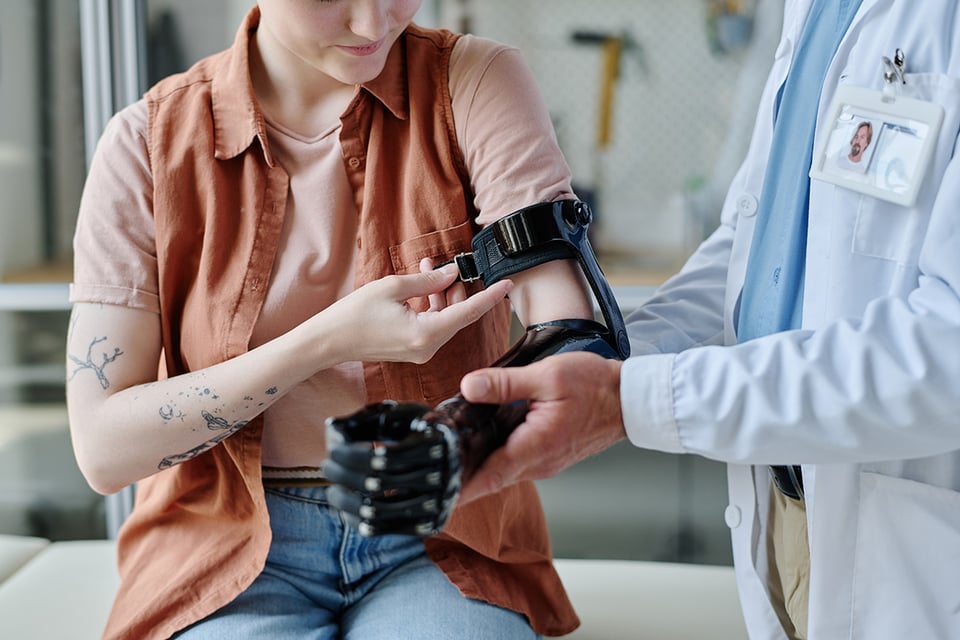
Advances in bionics, medical implants, and prosthetic devices continue to reshape how mechanical motion is integrated with the human body. As these technologies evolve, the demand for compact, reliable, and highly precise drive components has increased significantly. Engineers working in this space must balance mechanical performance with safety, comfort, and long-term durability, making component selection a critical aspect of successful medical device design.
Modern prosthetics and bionic systems rely on controlled motion to replicate natural movement as closely as possible. Powered prosthetic limbs, joint replacement systems, and assistive exoskeletal devices often use miniature gears, shafts, belts, and motors to translate electrical input into smooth, predictable motion. Even small inconsistencies in mechanical performance can lead to discomfort, reduced mobility, or accelerated wear. As a result, motion components used in these applications are designed with tight tolerances and consistent behavior across repeated cycles.
Material selection plays a central role in implantable and wearable medical systems. Drive components must withstand continuous loading while remaining lightweight and biocompatible where required. In prosthetic joints, for example, gears and shafts must resist fatigue while maintaining precise alignment over long periods of use. Polymers, stainless steels, and advanced alloys are often chosen for their strength, corrosion resistance, and dimensional stability. When multiple materials are combined within a single assembly, engineers carefully account for wear characteristics and load transfer to ensure long-term reliability.
Precision is equally important in motion transmission. Gears, pulleys, and couplings in bionic systems must deliver smooth torque with minimal backlash or vibration. Excessive noise or uneven motion can disrupt the natural feel of a device and reduce user confidence. In powered prosthetic hands or wrists, compact gear trains are commonly used to multiply motor torque while preserving fine positional control. Consistent machining and accurate tooth profiles help ensure repeatable motion and predictable force output, which is essential when human interaction is involved.
Durability and lifecycle performance are critical considerations in medical applications. Prosthetic and assistive devices are expected to operate reliably through thousands or millions of movement cycles, often under varying loads and environmental conditions. Bearings and shafts must maintain alignment, belts must resist stretching, and couplings must accommodate minor misalignments without introducing excessive stress. Engineers frequently work with component manufacturers that specialize in high-precision motion parts to ensure these systems perform consistently over time.
Miniaturization presents another ongoing challenge. Many bionic and implantable systems require compact assemblies that can fit within anatomical constraints while still delivering sufficient power and control. This drives the need for small-diameter shafts, fine-pitch gears, and low-profile pulleys that maintain strength despite their size. Advances in machining and manufacturing processes have made it possible to produce these components without sacrificing accuracy, supporting the continued development of more natural and capable medical devices.
Component integration also plays a role in safety and usability. Smooth mechanical motion helps reduce stress on surrounding tissues in implant systems and improves comfort in wearable prosthetics. Properly designed drive components can help absorb shock, limit abrupt movements, and provide controlled resistance that mimics biological response. These mechanical characteristics support better outcomes for patients and improve overall device acceptance.
As bionics, implants, and prosthetics continue to advance, the importance of precision mechanical components becomes more pronounced. Gears, shafts, motors, belts, and couplings form the foundation of reliable motion in these systems. Suppliers like SDP/SI support medical device engineers by providing high-quality drive components that meet the demanding requirements of human-centered applications. Through careful design and dependable component selection, engineers are able to create medical technologies that deliver both mechanical performance and meaningful improvements in quality of life.