

Advances in bionics, medical implants, and prosthetic devices continue to reshape how mechanical...
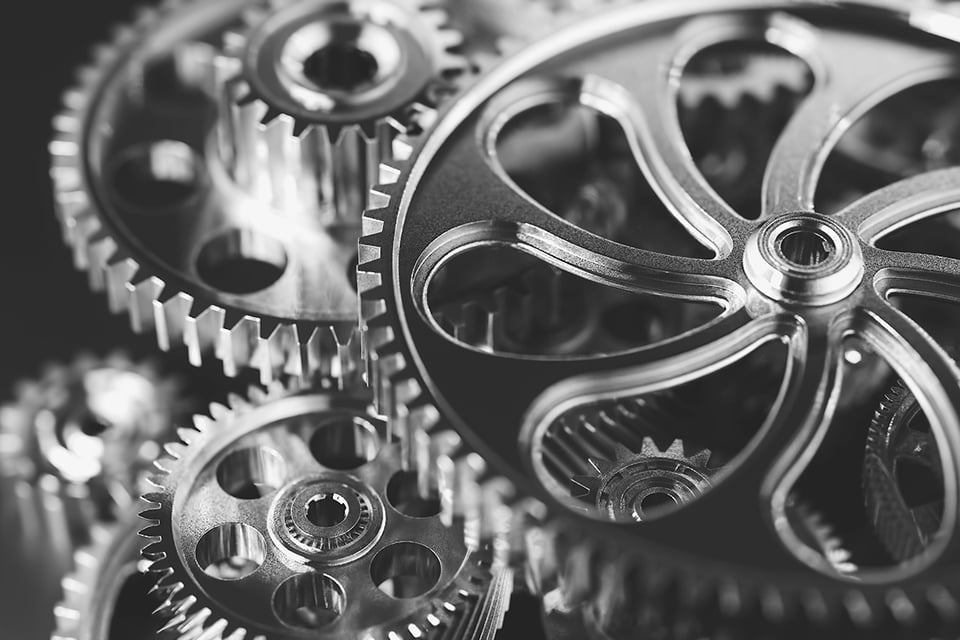
In industries where precision, durability and reliability are critical, hardened gears play an essential role. From industrial gearboxes and automotive transmissions to mining equipment and wind turbines, hardened gears are engineered to withstand high loads, continuous operation, and harsh environments.
Hardened Gears: Everything You Need to Know
Unlike standard gears, hardened gears undergo specialized heat treatment processes that create a hard, wear-resistant surface while maintaining a strong and tough core. This combination significantly improves performance, extends service life, and reduces maintenance costs.
Whether you're an engineer, equipment manufacturer, or procurement professional, understanding the advantages of hardened gears can help you select the right solution for demanding applications.
What are Hardened Gears?
Hardened gears are precision-engineered gears that undergo heat treatment to increase the hardness of their tooth surfaces. The objective is to improve resistance to wear, pitting, scuffing, and fatigue while preserving the toughness of the gear's core.
This combination provides exceptional strength without making the gear brittle.
Hardened gears are commonly manufactured from alloy steels designed specifically for heat treatment, allowing them to deliver superior mechanical performance under heavy loads and high operating speeds.
How are Hardened Gears Manufactured?
The manufacturing process involves several critical stages:
- Material selection using high-quality alloy steel.
- Precision gear cutting through hobbing, shaping, or CNC machining.
- Heat treatment to achieve the desired hardness.
- Finish grinding or honing for precise tooth geometry.
- Quality inspection to verify dimensional accuracy, hardness, and performance.
This process ensures every hardened gear meets strict quality and performance standards.
Common Gear Hardening Methods
Carburizing (Case-Hardened)
Carburizing adds carbon to the gear surface before quenching (surface hardening), producing a hard exterior with a tough core. It is widely used for automotive transmissions and industrial gearboxes.
- Excellent wear resistance
- High fatigue strength
- Ideal for high-load applications
Induction Hardening
Induction Hardening uses electromagnetic induction to rapidly heat only the gear teeth before quenching. The selective hardening minimizes distortion, which is particularly important for gears that require precise machining tolerances. Achieved hardness is about 50-60HRC.
- Localized hardening
- Reduced distortion
- Faster processing, no masking required
- Cost-effective for many gear types
Nitriding (Case-Hardened)
Nitriding diffuses nitrogen into the steel surface to create an extremely hard outer layer without requiring quenching.
- Outstanding wear resistance
- Minimal dimensional change
- Excellent corrosion resistance
- High surface hardness
Through Hardening
Through Hardening treats the entire gear rather than the surface. This method achieves moderate hardness (32–48 HRC), increasing its overall strength and ability to resist bending stresses.
- Uniform hardness throughout the gear
- Suitable for moderate load applications
For high-load applications, case hardening is generally preferred.
Typical Hardened Gear Types
Benefits of Hardened Gears
Long Service Life
A hardened surface minimizes friction and surface wear, extending component service life, reducing replacement frequency and downtime, lowering maintenance costs, and increasing equipment availability.
Improved Fatigue Strength
Surface hardening minimizes crack formation and contact fatigue, helping prevent premature gear failure.
Greater Reliability
Precision-hardened gears maintain accurate tooth profiles, enabling smoother power transmission, reduced vibration, and quieter operation. Industries operating around the clock depend on hardened gears to ensure consistent performance in mission-critical equipment.
Applications of Hardened Gears
Hardened gears are widely used across industries requiring reliable power transmission.
- Packaging machinery
- Machine tools
- Industrial gearboxes
- Conveyor systems
Robotics and Automation
- Industrial robots
- CNC machinery
- Material handling equipment
- Aircraft actuators
- Helicopter transmissions
- Flight control systems
Automotive Industry
- Manual transmission
- Automatic transmission
- Electric vehicle gearboxes
- Differential systems
Mining, wind energy, agricultural machinery and more all rely on hardened gears.
Why Choose Hardened Gears?
Although hardened gears have a higher initial manufacturing cost, they deliver a lower total cost of ownership through longer service life, reduced maintenance, and fewer replacements.
Designed for demanding industrial applications, hardened gears provide outstanding durability, precision, wear resistance, and high load capacity. Their reliability makes them well suited for industrial machinery, automation, renewable energy, aerospace, and other high-performance applications.
By reducing wear, minimizing downtime, and extending equipment life, hardened gears help improve operational efficiency while lowering maintenance costs.
Partnering with an experienced precision gear manufacturer such as QTC METRIC GEARS ensures access to high-quality hardened gears manufactured to exact specifications for reliable, long-term performance.
Frequently Asked Questions (FAQ)
What is a hardened gear?
A hardened gear is a gear that has undergone a heat treatment process, such as induction hardening or case hardening, to increase surface hardness while maintaining a tough core, improving wear resistance and load capacity.
Why are hardened gears better than standard gears?
Hardened gears last longer than standard gears, carry higher loads, resist wear, reduce maintenance, and perform more reliably in demanding environments.
What is the best hardening process for gears?
The ideal process depends on the application. Carburizing is commonly used for heavy-duty gears, while induction hardening and nitriding are preferred for specific performance and dimensional requirements.
How long do hardened gears last?
When properly designed, manufactured, lubricated, and maintained, hardened gears can last several times longer than untreated gears, even under heavy operating conditions.